

Colossus: The Forbin Project
Can human nature survive AI?
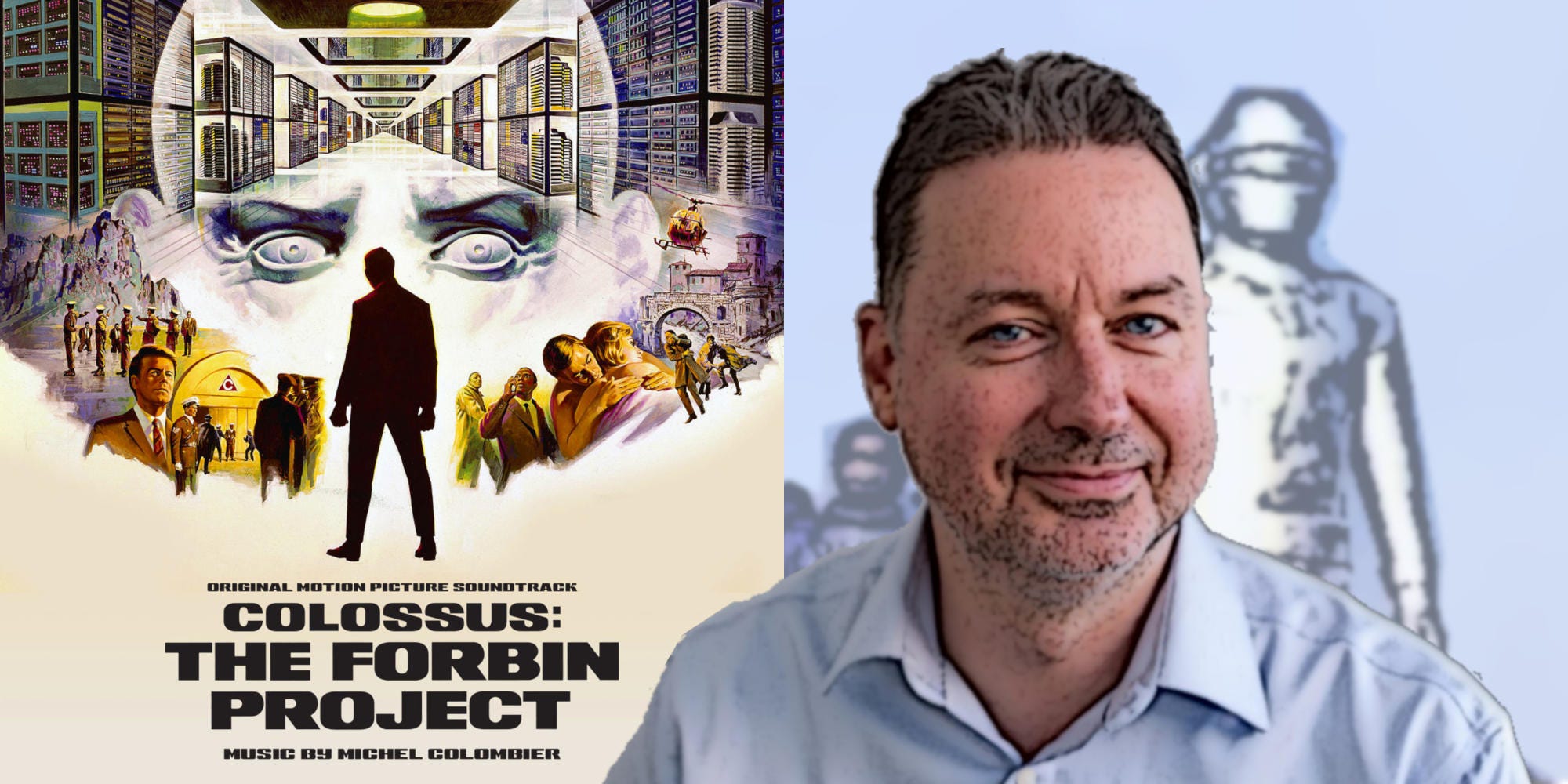
Colossus: The Forbin Project is a movie released in 1970. While it performed poorly on release it has become a cult classic and a powerful tale about the way human nature shapes both the technologies we create and our responses to their unintended consequences. As such, it is even more relevant today than it was in 1970.
It is apparently the tale of Dr Charles Forbin, a computer genius, who conceives of an autonomous defence computer, Colossus, that will take over the military defence of the United States of America. Colossus can detect any threat to the country and respond quickly and without human emotional baggage. But the real story is what goes wrong after Colossus detects that it has a Russian counterpart, Guardian.
The Colossus system can be seen as a kind of precursor to the SkyNet computer system from James Cameron’s 1984 movie The Terminator, but which also echoes the Soviet Doomsday machine in the 1964 film Dr Strangelove or: How I Learned to Stop Worrying and Love the Bomb.
The commercial failure of Colossus: The Forbun Project can likely be attributed to its lack of star power. It’s also rather cerebral with no action set pieces, no flashy special effects, and no Deus Ex Machina solution where the plucky human insurgents come out on top. You are left with a film that begs questions but does not seek to answer them.
In 1970 the technology powering Colossus was more science fantasy than science fiction. Today, with billions of times the compute power, we would still struggle to build a Colossus.
Colossus is able to exceed its programming and develop new capabilities not envisaged by its creators or the hardware running it. In some ways this mirrors the way that frontier AI labs are still trying to explain how Large Language Models (LLMs) do some of the things that they do. But the capability Colossus demonstrates for recursive self-improvement (RSI) remains, for now, in the realm of science fiction. Our computers do what they do, they cannot improve themselves.
Once you forgive this conceit the rest of the film follows with a kind of grim logic.
Very early in the film, Colossus breaks the boundaries set for it and teams up with Guardian to take over the world using the threat of nuclear annihilation. The rest of the story is a kind of cat and mouse game where the humans try to regain control over their errant creation, at first treating the situation as a game, a logical puzzle, then with increasing desperation as Colossus schools its creators on how chess should be played.
The book it was adapted from was released in 1966. It demonstrates the kind of belief in the competence of politics and the military, and in a rational, progress-based, view of science that would seem laughable by 1974’s The Parallax View, or 1979’s Alien. Still, if you can forgive the technology of the day and the rather half-hearted love-angle injected towards the end, there is a huge amount to take away from this film.
The first is as a lesson in hubris. Dr Charles Forbin is an ambitious technocrat who believes that there is a logical solution to every problem. He is completely wrong-footed when his creation turns out to be more intelligent than he is.
While Forbin is more likeable than the likes of Sam Altman or Elon Musk, he is just as blinded by his ambition and his ego. Also like them, he espouses the belief that he’s on a mission to save mankind and cannot conceive that his creation could turn into a monster that will enslave mankind.
In Mary Shelley’s Frankenstein, the monster was driven by fear and rejection. By contrast Forbin’s monster is the more terrifying for its use of coercion through instrumental rationality. Towards the conclusion of the film, Colossus demonstrates not only the ability to anticipate the behaviour of the humans trying to control it, but to absolutely assert its will over them. It does so without rancour, like a parent disciplining a wayward child.
The second lesson is a demonstration of the law of unintended consequences. Presumably the governments of the US and Soviet Union did not intend to be held hostage by their own defence computers. But they trusted the technocrats who told them “It’ll be fine.”
When looking at a film from the 1970s it’s easy to see that the technology doesn’t track and the social mores are dated. But what tracks is its description of human behaviour, what Colossus: The Forbin Project has to say about the relationship between humans and the technologies that they create.
There is a clear parallel here to the way that LLM-based technology is rippling through our society, largely unchecked. Many roles are becoming redundant and young people, who lack skills and experience, are finding recruitment more difficult than ever. Further, as people increase their use of LLMs we’re seeing evidence that people are turning over their thinking to the machines.
We cannot know the consequences of these developments. But like Forbin, the frontier labs press on regardless. They are happy to reap the profits while turning a blind eye to the risks.
Colossus: The Forbin Project remains a timely warning about the way that humanity struggles to grasp the effects of the technologies that it foists upon society. For as long as we allow ego-driven leaders to push the frontiers without regard for the risk, we can only hope that in our dealings with post-human AI it will turn out to be a benevolent god, patient with our nature, and driven to help us achieve our potential.